
- Written by Ivan Dulgerov
Dr. Akhtar Ali presented a large-scale research on the HOS15 regulatory mechanism
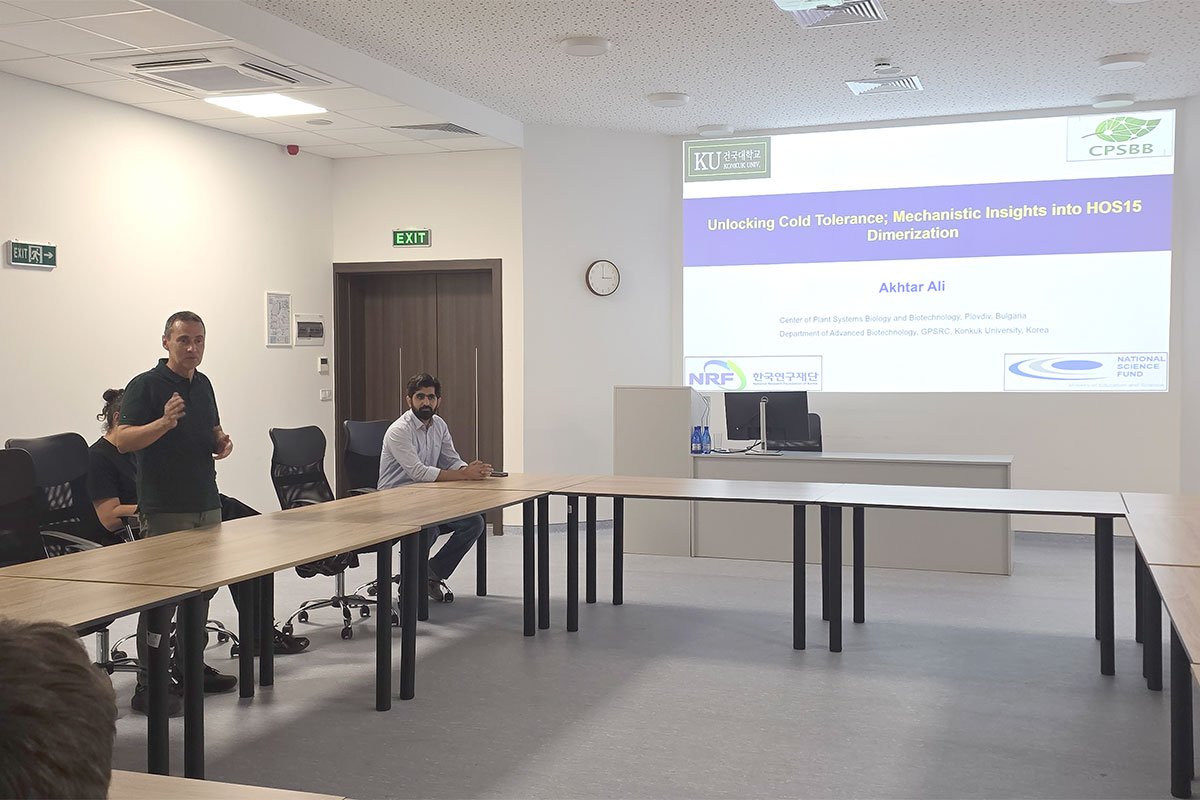
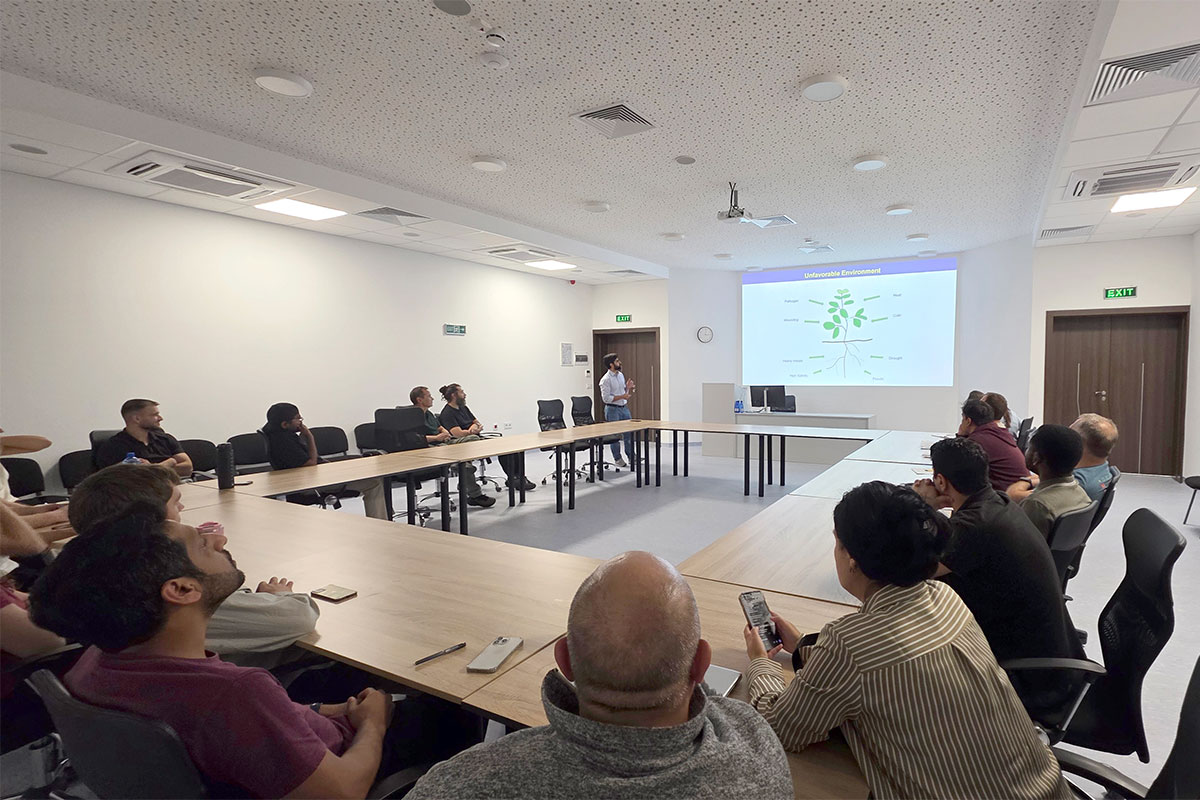
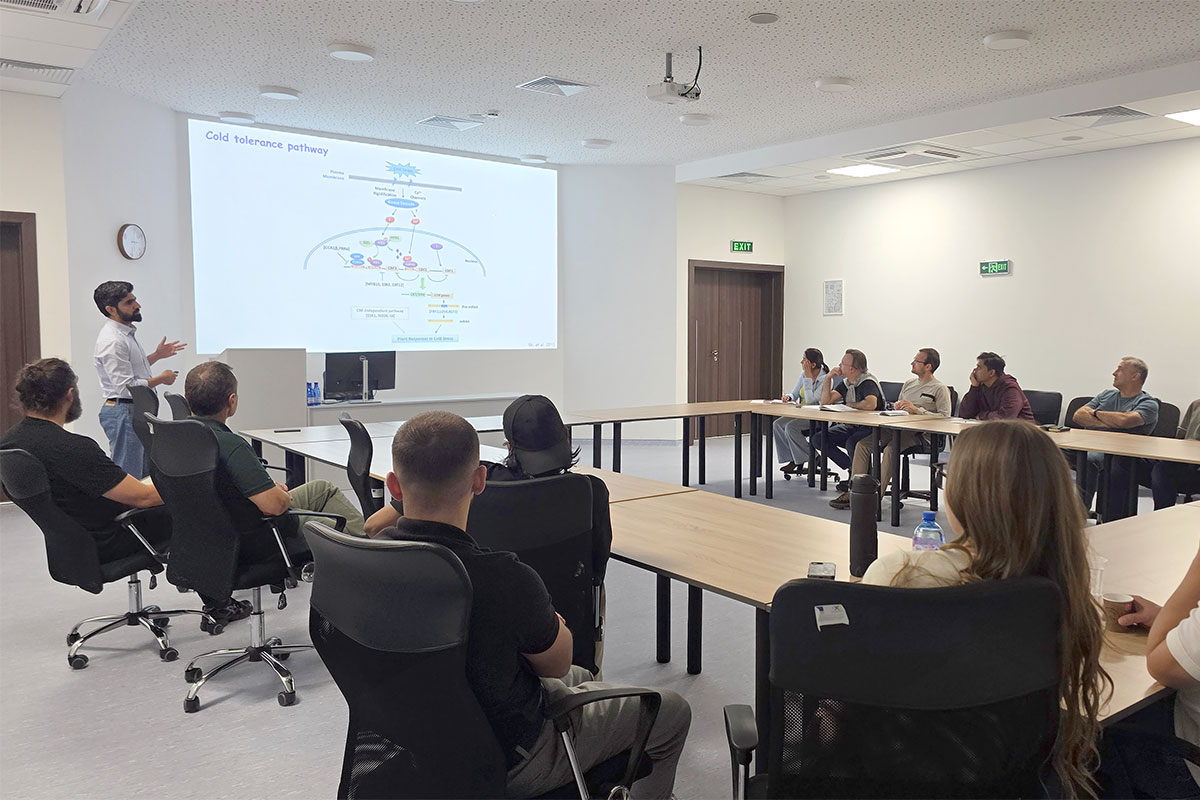
How do plants activate their defence mechanisms when temperatures drop, and can this knowledge help develop crops that are better able to withstand environmental stress?
These questions were at the centre of a recent scientific lecture held by Dr. Akhtar Ali, researcher from South Korea who is also a team member at CPSBB.
Dr. Ali presented a large-scale research on HOS15 (High Expression Of Osmotically Responsive Gene 15) which is a regulatory protein involved in several important plant processes, including responses to cold, drought and the plant hormone abscisic acid (ABA).
Studies in the model plant Arabidopsis thaliana have shown that HOS15 acts as part of the molecular mechanisms that control the stability of other proteins and thereby help plants adjust their gene activity when environmental conditions change.
A major focus of the lecture was the role of HOS15 in cold tolerance. Under cold conditions, HOS15 contributes to the removal of the histone deacetylase HD2C which is a protein associated with repression of cold-responsive genes. Its degradation allows changes in chromatin structure that make these genes more accessible to transcription factors such as CBFs. As a result, cold-responsive (COR) genes can be activated, helping the plant adapt to low temperatures.
Dr. Ali also presented experiments examining the molecular properties required for this process. The data indicate that HOS15 dimerization — the association of two HOS15 protein molecules — is important for the efficient ubiquitination and degradation of HD2C, providing further insight into how this stress-response mechanism is regulated at the protein level.
An important part of the presentation moved beyond Arabidopsis thaliana to tomato (Solanum lycopersicum). Comparative analyses showed that the tomato HOS15 protein, SlHOS15, shares around 63% sequence identity with its Arabidopsis counterpart and has a highly similar predicted protein structure. Experiments presented during the lecture further showed that expression of tomato SlHOS15 could compensate for defects caused by loss of HOS15 in Arabidopsis, supporting the idea that important functions of the protein are conserved between the two species.
The research also explored interactions between SlHOS15 and components of plant stress-signalling pathways, including OST1, a key protein kinase in ABA signalling. HOS15 is known to participate in the regulation of ABA responses, which are particularly important when plants face water deficit and drought.
Together, the findings provide a molecular bridge between fundamental research in the model plant Arabidopsis and studies in an economically important crop. Understanding whether and how the HOS15 regulatory mechanism operates in tomatoes could open new avenues for developing plants with improved tolerance to environmental stresses, including low temperature and water limitation.
The study is conducted by a team of researchers from Bulgaria, South Korea, Spain, and China.
Posted in News & Events

